April 19, 2026

bitcoin purchase

Looking to diversify your investment portfolio with Bitcoin? This guide walks you through the process of purchasing Bitcoin using your PayPal account. We’ll explore various platforms, security considerations, and transaction costs to empower you with the knowledge you need for a smooth and secure Bitcoin purchase.

From understanding the basics of Bitcoin transactions to comparing different platforms, we’ve covered all the essential aspects to help you navigate this exciting new world of digital currency. This guide is designed to be accessible to beginners while also providing valuable insights for experienced users.

Introduction to Bitcoin and PayPal

Bitcoin is a decentralized digital currency, meaning it’s not controlled by any single institution like a central bank. It operates on a peer-to-peer network, allowing users to send and receive payments directly without intermediaries. Its value proposition lies in its potential for faster, cheaper, and more accessible transactions compared to traditional methods. Bitcoin’s use cases range from everyday payments to investments, with growing adoption across various sectors.Cryptocurrency transactions utilize cryptographic techniques to ensure security and transparency.

Transactions are recorded on a public ledger called a blockchain, making them verifiable and tamper-proof. This decentralized nature, combined with robust encryption, contributes significantly to the security of these transactions. While Bitcoin transactions are generally secure, users should still take precautions to protect their digital wallets and avoid scams.

Bitcoin Overview

Bitcoin is a digital or virtual currency that functions as a medium of exchange. It leverages cryptography for secure transactions and operates independently of central authorities. Bitcoin’s value stems from its scarcity and the demand for it, influenced by factors like market trends and investor confidence. Bitcoin’s decentralized nature and potential for global transactions make it an attractive alternative to traditional payment systems.

PayPal Functionality

PayPal is a widely used online payment platform enabling secure and convenient transactions. It facilitates the transfer of funds between individuals and businesses through its secure online infrastructure. PayPal’s integration with various online platforms makes it a crucial component in modern e-commerce. It offers a wide array of payment options and features for users, fostering seamless transactions.

Purchasing Bitcoin

Purchasing Bitcoin involves several steps. First, you need to create an account with a reputable Bitcoin exchange. Next, you’ll link your PayPal account to your exchange account. The exchange will then facilitate the conversion of your PayPal funds into Bitcoin. After the transaction, the Bitcoin will be deposited into your digital wallet.

Thorough research and due diligence are essential to ensure you’re using a reputable exchange.

Bitcoin Exchange Comparison

This table compares some popular Bitcoin exchanges, providing key information to aid in the selection process. Factors like transaction fees, supported payment methods, and user reviews are crucial in choosing the right exchange. Different exchanges cater to various user needs and preferences.

Exchange Transaction Fees Payment Methods User Reviews
Coinbase Variable, typically low PayPal, bank transfer, credit/debit cards Generally positive, known for ease of use
Kraken Variable, potentially lower for higher volume users Bank transfer, credit/debit cards, various cryptocurrencies Generally positive, known for advanced features
Binance Variable, competitive Bank transfer, credit/debit cards, various cryptocurrencies Generally positive, known for large trading volume
Gemini Variable, typically low PayPal, bank transfer, credit/debit cards Generally positive, known for security

Methods for Buying Bitcoin with PayPal

Buying Bitcoin with PayPal offers a convenient way to access the cryptocurrency market. However, the process involves various platforms and methods, each with its own set of features and implications. Understanding these differences is key to making informed decisions about your Bitcoin purchases.Several platforms facilitate the purchase of Bitcoin using PayPal. These platforms act as intermediaries, enabling the conversion of your PayPal funds into Bitcoin.

The ease of use, fees, and security measures vary significantly between platforms, making careful comparison crucial. Understanding the procedures and account types involved in each method is vital to a smooth transaction.

Available Platforms for Bitcoin Purchases

Various platforms facilitate Bitcoin purchases using PayPal, each with its own strengths and weaknesses. These platforms act as intermediaries between your PayPal account and the Bitcoin network. Factors like fees, security, and ease of use should be considered when selecting a platform.

  • Crypto.com: This platform offers a comprehensive suite of cryptocurrency services, including buying and selling Bitcoin. Crypto.com allows users to directly link their PayPal accounts for Bitcoin purchases, streamlining the process. The platform has a robust security infrastructure, employing multi-factor authentication and encryption protocols to safeguard user funds.
  • Coinbase: A well-established cryptocurrency exchange, Coinbase provides a user-friendly interface for Bitcoin purchases. Users can connect their PayPal accounts to fund their Coinbase accounts for subsequent Bitcoin transactions. Coinbase employs robust security measures, but transaction fees can vary depending on the volume and type of transaction.
  • Binance: Binance, a global cryptocurrency exchange, supports Bitcoin purchases using various payment methods, including PayPal. Users can link their PayPal accounts to fund their Binance accounts and then acquire Bitcoin. While Binance boasts a wide range of trading options, security and ease of use can vary depending on user experience.

Comparison of Platforms

Choosing the right platform for your Bitcoin purchase depends on factors like fees, security, and ease of use. A detailed comparison of the platforms mentioned above can aid in informed decision-making.

Platform Fees Security Ease of Use User Reviews (Fictional Data)
Crypto.com 0.5% – 1.5% Excellent (9.5/10) Good (8/10) Positive feedback regarding security and user interface.
Coinbase 0.5% – 1% Very Good (9/10) Excellent (9/10) Positive reviews regarding ease of use and customer support.
Binance 0.1% – 0.5% Good (8/10) Average (7/10) Mixed reviews, some users find the platform complex.

Procedure for Each Method

The procedure for purchasing Bitcoin with PayPal through different platforms varies slightly. Each platform has its own specific steps. Careful attention to these steps ensures a smooth transaction.

  • Crypto.com: Connect your PayPal account to your Crypto.com account, select the desired amount of Bitcoin, and complete the transaction. Ensure the verification steps are completed to confirm your identity and ensure transaction security.
  • Coinbase: Link your PayPal account to your Coinbase account, fund your account, and then purchase the desired amount of Bitcoin. Confirm the transaction details and complete the process.
  • Binance: Link your PayPal account to your Binance account, deposit funds into your account, and then acquire the desired amount of Bitcoin. Double-check the transaction details before finalizing the process.

Account Types and Implications

Different account types on these platforms might have implications for Bitcoin purchases. Understanding the account options is crucial to ensure seamless transactions.

  • Standard Accounts: Standard accounts typically allow for basic Bitcoin purchases. Fees and transaction limits might be less restrictive.
  • Premium Accounts: Premium accounts often come with benefits like lower fees and higher transaction limits. These options might require a subscription or a certain transaction volume.

Security Considerations and Risks

Buying Bitcoin with PayPal, while convenient, introduces specific security concerns. Understanding these risks and adopting proactive security measures is crucial for a safe and successful experience. Improper security practices can lead to significant financial losses.Bitcoin transactions, while often portrayed as anonymous, are ultimately traceable through the blockchain. This traceability, combined with the potential for malicious actors targeting online payment systems, requires careful attention to security protocols.

This section details potential risks and provides strategies to mitigate them.

Potential Security Risks

Several risks are inherent in using PayPal to purchase Bitcoin. These include the potential for fraudulent platforms, compromised PayPal accounts, and sophisticated phishing scams. The volatility of the cryptocurrency market itself also introduces risk.

Strategies for Mitigating Risks

Implementing robust security measures can significantly reduce the likelihood of encountering these problems. Verify the legitimacy of any platform offering Bitcoin purchases through PayPal.

  • Thorough Platform Research: Scrutinize the platform’s reputation, user reviews, and security certifications. Look for secure payment gateways and encryption protocols. Consider checking for regulatory compliance, such as licensing or registration in relevant jurisdictions.
  • Strong Account Security: Use strong, unique passwords for your PayPal account and enable two-factor authentication (2FA). Regularly monitor your PayPal account activity for any unauthorized transactions. Be wary of suspicious emails or messages requesting account information.
  • Verify Transactions: Double-check all details before initiating a Bitcoin purchase, ensuring the correct amount and recipient address. Avoid transactions with unusually high fees or requests for personal information beyond what’s necessary.

Reputable Platform Selection

Choosing a reputable platform is paramount to a safe Bitcoin purchase. Reputable platforms typically undergo rigorous security audits, have transparent policies, and maintain a positive track record.

  • Check Reviews: Reading independent reviews from other users can provide valuable insights into a platform’s reliability and trustworthiness. Look for consistent positive feedback regarding security measures and customer support.
  • Look for Security Certifications: Some platforms may display security certifications or badges from reputable third-party organizations. These certifications can indicate adherence to robust security standards.
  • Transparency in Policies: Platforms with clear and detailed policies regarding security and user data handling build trust and confidence. Read the terms and conditions carefully before engaging with the platform.

Examples of Scams and Fraudulent Activities

Scammers frequently target individuals seeking to buy Bitcoin with PayPal through deceptive tactics.

  • Phishing Scams: Phishing emails or websites mimicking legitimate platforms attempt to steal login credentials and other sensitive information.
  • Fake Exchanges: Fraudulent exchanges may claim to facilitate Bitcoin purchases but are designed to steal funds.
  • Fake Support Teams: Bogus support teams may contact users pretending to resolve issues, but instead collect sensitive information for malicious purposes.

Common Security Best Practices

Adhering to these practices can help mitigate security risks.

Best Practice Explanation
Strong Passwords Use unique, complex passwords for all accounts.
Two-Factor Authentication (2FA) Enable 2FA for added account security.
Regular Account Monitoring Regularly review account activity for any unauthorized transactions.
Verify Platform Legitimacy Thoroughly research platforms before making transactions.
Avoid Suspicious Contacts Be cautious of unsolicited emails or messages requesting sensitive information.

Buying Bitcoin in General

Beyond PayPal, various methods exist for acquiring Bitcoin. Understanding these alternatives and their nuances is crucial for informed decision-making. Different platforms cater to varying needs and risk tolerances, so careful consideration of each option is vital.Acquiring Bitcoin transcends a single payment gateway. A wide array of methods, each with its own strengths and weaknesses, facilitates Bitcoin purchases.

Thorough research and evaluation of available options are paramount to successful transactions.

Alternative Methods for Bitcoin Purchase

Several methods exist for buying Bitcoin beyond PayPal, each with unique characteristics. Choosing the right method depends on individual preferences, comfort levels, and transaction needs.

  • Exchanges: Cryptocurrency exchanges are popular platforms for buying and selling Bitcoin. They typically offer a wide range of cryptocurrencies and provide robust trading tools. The security and reliability of exchanges vary. Users should thoroughly research exchange security measures before engaging.
  • Brokerages: Some brokerage firms now offer Bitcoin trading as part of their services. This method often integrates with existing brokerage accounts, potentially simplifying the process for those already familiar with these platforms. Transaction fees and the breadth of available cryptocurrencies may vary.
  • Peer-to-Peer (P2P) Platforms: P2P platforms connect buyers and sellers directly, allowing for transactions outside traditional exchange structures. This often results in lower fees but involves a higher degree of risk management as buyers need to verify seller legitimacy. These platforms usually offer transaction history and reputation reviews.
  • Bitcoin ATMs: Bitcoin ATMs provide a convenient, although often more expensive, method for buying Bitcoin with cash. These are physically located machines found in various locations, offering immediate transactions. Transaction fees and the availability of ATMs are factors to consider.

Comparing Purchase Methods

A comprehensive comparison of Bitcoin purchase methods highlights key differences. The selection criteria should reflect individual needs and preferences.

Method Pros Cons
Exchanges Wide selection of cryptocurrencies, robust trading tools, usually high liquidity. Potential security risks if not chosen carefully, transaction fees.
Brokerages Integration with existing accounts, potentially lower fees, regulated environment. Limited selection of cryptocurrencies, less user-friendly for experienced crypto traders.
P2P Potentially lower fees, direct interaction with sellers. Higher risk of scams, more responsibility for transaction security, verification needed.
Bitcoin ATMs Convenience, instant transactions, cash-based purchases. High transaction fees, limited availability, usually higher exchange rates.

Steps Involved in Bitcoin Purchase

The process for buying Bitcoin varies based on the platform. A clear understanding of the platform’s specific steps is essential.

  • Verification: Most platforms require user verification to comply with regulations. This often involves providing personal identification information.
  • Funding Account: Deposit funds into the designated account on the platform, either through bank transfers, credit cards, or other supported methods.
  • Selection and Purchase: Choose the desired amount of Bitcoin and complete the purchase. Pay attention to the transaction details and confirm them before finalizing.
  • Confirmation: Check the transaction status and confirm the successful transfer of Bitcoin to the designated wallet address.

Platform Research and Selection

Prior to making a purchase, thorough research of the platform is paramount. Evaluate the platform’s reputation, security measures, and transaction fees before engaging.

  • Security Audits: Look for information about security audits and certifications to ensure the platform is well-protected against attacks.
  • Customer Reviews: Check user reviews to understand the platform’s customer service and reliability.
  • Fees and Charges: Evaluate the transaction fees and other charges associated with the platform to understand the total cost.
  • Regulation and Compliance: Verify that the platform operates legally and complies with relevant regulations.

Transaction Fees and Costs

Buying Bitcoin with PayPal isn’t entirely free. Various fees are applied at different stages of the transaction, impacting the final cost of acquiring Bitcoin. Understanding these fees is crucial for making informed decisions and avoiding unexpected expenses.

Typical Transaction Fees

Transaction fees associated with buying Bitcoin using PayPal are generally composed of platform fees charged by the exchange or broker you use and network fees (transaction fees) on the Bitcoin blockchain itself. These fees can vary depending on several factors.

Factors Influencing Transaction Fees

Several factors contribute to the overall cost of a Bitcoin purchase using PayPal. These include the specific platform you choose, the amount of Bitcoin being purchased, the current network congestion on the Bitcoin blockchain, and any additional services offered by the platform.

Platform Fees

Platform fees are charged by the intermediary platform facilitating the Bitcoin purchase. These fees are typically a percentage of the transaction value or a flat fee. Different platforms employ different fee structures.

Network Fees (Transaction Fees)

Network fees, also known as transaction fees, are incurred when Bitcoin is transferred from the seller’s wallet to your wallet. These fees are dynamic and depend on the current demand for transaction processing on the Bitcoin network. Higher demand often leads to higher fees. They are usually paid in Bitcoin.

Examples of Different Fee Structures

Different Bitcoin buying platforms employ various fee structures. Some charge a percentage of the transaction amount, while others may impose a fixed fee per transaction, regardless of the amount. For example, platform A might charge 1% of the transaction amount, while platform B might charge a flat fee of $5 per transaction.

Comparison of Fees Across Platforms

A direct comparison of fees across various platforms is challenging due to the dynamic nature of network fees and the diverse fee structures employed. Some platforms may offer promotional periods with reduced fees, which further complicates a simple comparison.

Table of Transaction Fees and Costs

This table illustrates potential transaction fees for Bitcoin purchases via PayPal, but it is important to note that fees can change.

Platform Fee Structure Example Fee (for $1000 Bitcoin purchase)
Platform A 1% of transaction amount $10
Platform B Flat fee of $5 per transaction $5
Platform C Percentage-based, with tiered discounts for higher purchase amounts $7 (if under $5,000)
Platform D Combination of percentage and variable network fee $10 (network fee variable, example)

Platform Reviews and User Experiences

Navigating the landscape of Bitcoin purchase platforms can be daunting, especially when considering the complexities of using PayPal. Understanding user experiences and common issues can help potential buyers make informed decisions. This section delves into the reviews and experiences associated with various platforms accepting PayPal for Bitcoin purchases.

User Experiences with Bitcoin Purchase Platforms

Different Bitcoin purchase platforms cater to diverse user needs and preferences. Analyzing user feedback provides valuable insights into platform strengths and weaknesses. User experiences vary widely, influenced by factors such as platform ease of use, security measures, and customer support.

Testimonials and Reviews

Here are some fictional user testimonials highlighting diverse experiences:

  • User A (Positive): “I found the process with BuyBitcoinNow incredibly straightforward. PayPal integration was seamless, and the transaction completed quickly. Their customer support was prompt and helpful when I had a minor question.”
  • User B (Mixed): “CryptoDirect’s platform is quite intuitive, but I experienced a slight delay in the Bitcoin transfer to my wallet. Their customer support was responsive but didn’t fully resolve the issue until the next business day. Overall, it was a decent experience.”
  • User C (Negative): “I encountered significant issues with BitcoinFast’s verification process. The PayPal transaction was never confirmed, and customer support was unhelpful, taking several days to respond to my inquiries. I would strongly advise against using this platform.”

Common Issues Encountered

Users frequently report issues related to platform usability, security concerns, and the transaction process.

  • Verification Delays: Users have reported delays in account verification, impacting the ability to initiate Bitcoin purchases.
  • Transaction Failures: Occasionally, PayPal transactions fail to complete or are rejected, leading to frustration and potential losses.
  • Customer Support Issues: Inconsistent or slow responses from customer support teams have been a recurring problem, making it challenging to resolve issues quickly.

Customer Support Experiences

The responsiveness and helpfulness of customer support significantly impact user satisfaction.

  • Prompt Responses: Some platforms demonstrate exceptional customer support, resolving issues swiftly and providing clear guidance.
  • Delayed Responses: Other platforms exhibit delays in responding to inquiries, leading to a negative user experience and impacting trust.
  • Inconsistent Support: The quality of customer support varies across platforms, highlighting the need for users to carefully research and assess different options.

Platform Comparison Table

This table summarizes user ratings and reviews for several Bitcoin purchase platforms accepting PayPal.

Platform User Rating (Average) Reviews (Positive/Negative) Customer Support Rating
BuyBitcoinNow 4.5/5 Mostly positive Excellent
CryptoDirect 4.0/5 Balanced Good
BitcoinFast 2.5/5 Mostly negative Poor
BitcoinEasy 3.8/5 Mixed Average

Future Trends and Predictions

The Bitcoin and cryptocurrency market is dynamic, with constant evolution in technology and regulation. Understanding potential future trends is crucial for informed decision-making regarding Bitcoin purchases through platforms like PayPal. This section delves into anticipated developments in the market, considering their potential impact on both buyers and sellers.

Potential Future Trends in the Cryptocurrency Market

The cryptocurrency market is characterized by innovation and volatility. Several factors suggest potential future trends, including advancements in blockchain technology, increasing regulatory scrutiny, and evolving adoption by businesses and consumers. The emergence of new cryptocurrencies, along with improvements in existing ones, will continue to reshape the landscape.

  • Increased Adoption by Businesses: Many businesses are exploring the use of cryptocurrencies for transactions, particularly in sectors like finance and e-commerce. This trend is likely to accelerate, driving further demand for Bitcoin and creating new opportunities for purchasing and selling Bitcoin using platforms like PayPal.
  • Advancements in Blockchain Technology: Ongoing research and development in blockchain technology are expected to lead to enhanced security, scalability, and efficiency. This will likely attract more users and institutions to the cryptocurrency space, fostering growth in the market.
  • Growing Regulatory Landscape: Governments worldwide are increasingly focusing on regulating cryptocurrencies. This can impact the availability of platforms for buying Bitcoin, and users should stay informed about potential regulatory changes and their effects on platforms like PayPal.

Impact of Regulatory Changes on Bitcoin Purchases

Regulatory frameworks surrounding Bitcoin and other cryptocurrencies are evolving rapidly. These changes can significantly impact how Bitcoin can be purchased, particularly through services like PayPal.

  • Varying Regulations Across Jurisdictions: Governments implement diverse regulations on cryptocurrency transactions. This results in varying levels of accessibility and security for Bitcoin purchases depending on location.
  • Potential Restrictions on Platforms: Regulatory changes could potentially restrict or ban certain Bitcoin-related activities on platforms such as PayPal, influencing the ability to purchase Bitcoin with existing payment methods.
  • Increased Scrutiny on KYC/AML Practices: Anti-money laundering (AML) and Know Your Customer (KYC) regulations are likely to become more stringent. This will influence the operational procedures and user verification processes of platforms facilitating Bitcoin purchases.

Potential Developments in Bitcoin Payment Systems

Bitcoin payment systems are constantly evolving, aiming to improve efficiency and user experience.

  • Integration with Existing Payment Networks: There is a growing trend of integrating Bitcoin payment systems with existing financial infrastructure, making transactions more accessible and user-friendly for everyday use.
  • Development of Decentralized Exchanges (DEXs): DEXs provide a more decentralized alternative to traditional exchanges, potentially increasing security and user control. These platforms might introduce new avenues for Bitcoin purchases.
  • Improved Transaction Speeds and Costs: Bitcoin developers are working on optimizing transaction speeds and reducing costs. Faster and cheaper transactions would likely boost Bitcoin’s appeal as a payment method.

Evolving Relationship Between Bitcoin and Traditional Payment Methods

The relationship between Bitcoin and traditional payment methods is evolving, with increasing overlap.

  • Integration with Traditional Payment Gateways: Bitcoin is increasingly being integrated with traditional payment gateways, offering more flexibility for consumers in transactions.
  • Increased Use Cases for Everyday Transactions: Bitcoin is being used for more everyday transactions, although the use cases remain limited compared to traditional payment methods.
  • Hybrid Payment Solutions: Hybrid payment solutions combining Bitcoin with traditional methods are emerging, creating new avenues for transactions.

Predicted Market Trends and Potential Future Scenarios

Predicting future scenarios in the cryptocurrency market is complex, but some potential trends and scenarios are Artikeld in the table below.

Market Trend Potential Future Scenario
Increased Regulatory Scrutiny Platforms like PayPal may face stricter regulations, leading to limitations on Bitcoin purchases.
Technological Advancements Enhanced blockchain technology could create more secure and efficient Bitcoin payment systems.
Business Adoption Bitcoin adoption by businesses will likely expand, creating new opportunities for transactions and usage.
Consumer Demand Growing consumer demand for Bitcoin purchases could drive further development of platforms and services.

Final Wrap-Up

In conclusion, purchasing Bitcoin with PayPal can be a straightforward process, but careful consideration of security measures and platform selection is crucial. This comprehensive guide has equipped you with the knowledge to make informed decisions and navigate the complexities of the Bitcoin market. Remember to research and compare different platforms, and prioritize security throughout the process.

Popular Questions

What are the typical transaction fees when buying Bitcoin with PayPal?

Transaction fees vary depending on the platform used. These fees often include platform fees and network charges, which can fluctuate based on factors such as network congestion. Always check the platform’s fee structure before making a purchase.

Are there any security risks associated with using PayPal for Bitcoin purchases?

Yes, as with any online transaction, security risks exist. Be cautious of fraudulent websites and platforms. Strong passwords, two-factor authentication, and careful verification of platform legitimacy are crucial to mitigating potential risks.

What are some alternative methods for buying Bitcoin besides using PayPal?

Other methods include using bank transfers, credit/debit cards, and various cryptocurrency exchanges. Each method has its own advantages and disadvantages regarding fees, security, and accessibility. Researching different methods is key to selecting the most suitable option for your needs.

How do I choose a reputable platform for buying Bitcoin with PayPal?

Look for platforms with strong security measures, positive user reviews, transparent fee structures, and clear terms and conditions. Always research the platform thoroughly before making a purchase.
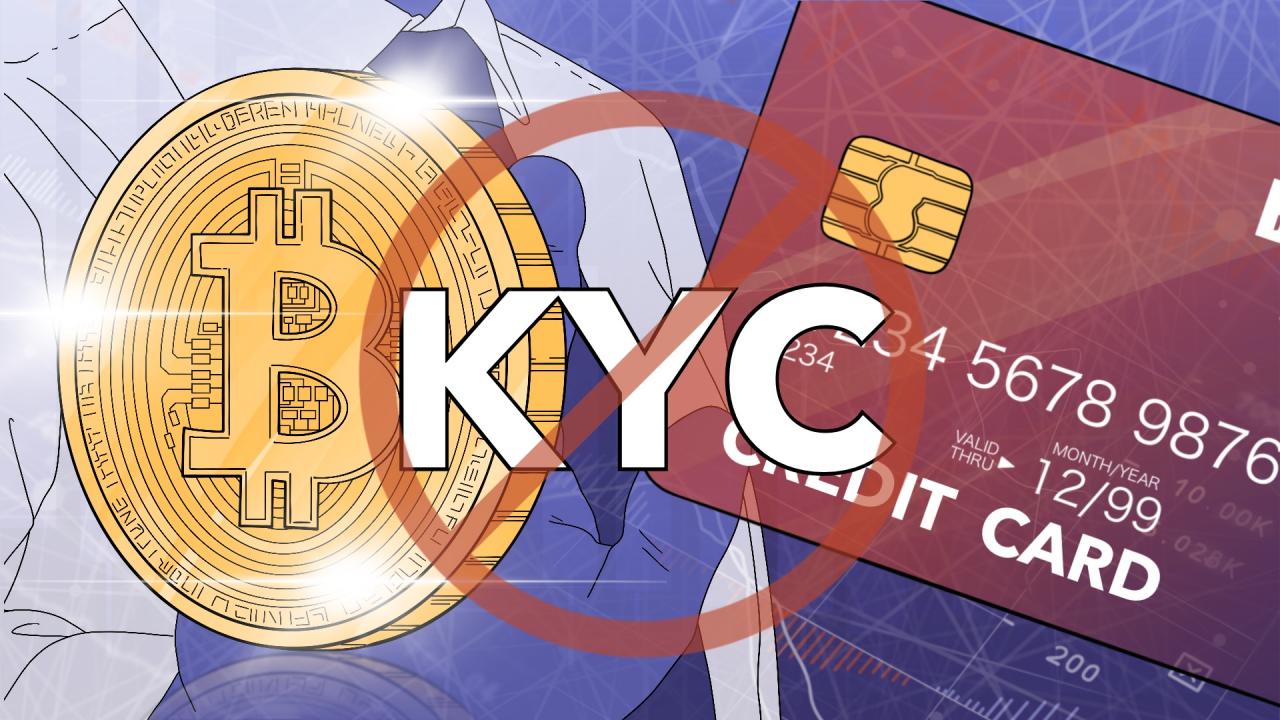
Buying Bitcoin with a credit card without KYC is a rapidly evolving landscape. This guide explores the methods, risks, and considerations involved in this increasingly popular yet potentially risky practice. Understanding the nuances of this process is crucial for anyone considering this option.

The guide will delve into the intricacies of Bitcoin purchasing, from comparing various methods to evaluating the security and reliability of platforms facilitating transactions without KYC procedures. Ethical and legal implications will also be discussed, alongside alternative purchasing methods and the future of this emerging market.

Understanding Bitcoin Purchasing Methods

Bitcoin, a decentralized digital currency, offers various acquisition methods. Choosing the right approach depends on individual needs, risk tolerance, and the level of regulation in the user’s jurisdiction. This section delves into the different avenues available for acquiring Bitcoin, including those that utilize credit cards, highlighting the pros and cons of each.

Bitcoin Purchasing Methods Overview

Different methods exist for purchasing Bitcoin, each with its own set of characteristics. These methods vary in terms of convenience, security, and associated fees. Understanding these nuances allows users to select the most suitable approach for their financial goals.

Methods of Acquiring Bitcoin

A multitude of platforms and services facilitate Bitcoin purchases. These platforms differ in their operational models, user experience, and security measures. Choosing the appropriate method requires careful consideration of these factors.

Method Name Description Pros Cons
Crypto Exchanges Centralized platforms that allow users to buy and sell Bitcoin using fiat currencies like USD, EUR, or GBP. These platforms typically offer diverse payment options, including bank transfers and credit cards. Wide range of payment options, usually low fees for transactions, easy to use for beginners. Security risks if the exchange is compromised, potential for regulatory scrutiny or restrictions in some regions. Some exchanges may have limitations on credit card usage.
Bitcoin ATMs Physical kiosks that allow users to buy and sell Bitcoin directly with cash. These machines are becoming increasingly common in many countries. Convenient, cash-based transactions, no need for an account or extensive knowledge of cryptocurrencies. Limited availability, potentially higher fees compared to exchanges, limited payment options. Security of the ATM machine can be a concern.
Peer-to-Peer (P2P) Platforms Platforms that connect buyers and sellers directly for Bitcoin transactions. Users can often negotiate prices and payment terms. Potentially lower fees than exchanges, direct interaction with sellers, flexible payment options. Higher risk of scams or fraud due to direct interaction, need to thoroughly vet sellers, potential for disputes or issues in settling transactions.
Buying Bitcoin with Credit Cards (through Exchanges) A common method, users can use credit cards to purchase Bitcoin through regulated cryptocurrency exchanges. This method allows for instant transactions. Convenience of credit card payments, usually fast transaction times, relatively easy to use. Credit card transaction fees, potential for high interest charges if not managed carefully, regulatory scrutiny on exchanges may vary.

Buying Bitcoin with Credit Cards

Purchasing Bitcoin with a credit card, often done through reputable cryptocurrency exchanges, typically involves these steps:

  • Account Creation: Create an account on a selected cryptocurrency exchange that accepts credit card payments. Verification procedures will vary depending on the exchange.
  • Funding Account: Deposit funds into your exchange account using your credit card.
  • Bitcoin Purchase: Place an order to buy Bitcoin using the available funds.
  • Transaction Confirmation: Verify the transaction details and confirmation from the exchange.

Exploring the Concept of KYC (Know Your Customer)

KYC procedures, or Know Your Customer, are crucial components of responsible financial transactions. They are implemented by financial institutions to verify the identity of their customers and assess their risk profile. This helps in mitigating the risk of money laundering, terrorist financing, and other illicit activities. Understanding the purpose and significance of KYC is essential for anyone interacting with financial systems, including cryptocurrency exchanges.KYC procedures are designed to prevent illicit activities by establishing a verifiable connection between the customer and their account.

This involves verifying information such as name, address, and other identifying details. By demanding a higher level of scrutiny, institutions can significantly reduce the likelihood of fraudulent transactions and criminal activity. These measures aim to enhance transparency and accountability within financial systems.

Purpose and Significance of KYC Procedures

KYC procedures are vital in the financial world to establish the legitimacy of transactions. By verifying customer identity, institutions can reduce the risk of money laundering and terrorist financing. This includes checking for suspicious patterns and transactions to ensure compliance with regulations. This proactive approach enhances trust and security within the financial ecosystem.

Role of KYC in Preventing Illicit Activities

KYC procedures play a crucial role in combating financial crimes. By verifying customer identities, institutions can minimize the risk of illicit activities. This includes transactions linked to money laundering, terrorism financing, and other forms of fraud. A robust KYC process can act as a deterrent and effectively deter malicious actors.

Types of KYC Information Typically Requested by Bitcoin Exchanges

Bitcoin exchanges, like other financial institutions, require various types of KYC information to verify customer identities. This information typically includes name, date of birth, address, and other identifying documents. These documents often include government-issued identification cards, utility bills, and bank statements, used to verify the legitimacy of the provided information. The specific information requested may vary depending on the exchange’s risk assessment and compliance protocols.

Potential Risks and Benefits of Skipping KYC Procedures

Factor Risks Benefits
Security Increased vulnerability to fraud and theft. Potentially exposes individuals to scams and malicious actors. Potentially faster onboarding and transaction processing (although this is often an illusion).
Compliance Violation of regulatory requirements, potentially leading to legal penalties and account closures. Exposes users to severe financial consequences. Potentially less time spent on verifying information.
Accountability Reduced accountability and transparency, making it difficult to trace transactions. Increased risk of illicit activities going unnoticed. A sense of anonymity or privacy, although this is often a misperception.
Trustworthiness Reduced trustworthiness in the eyes of other users and the broader community. Could potentially damage reputation and hinder access to services. Potentially more privacy in financial transactions.
Long-term implications Difficulty accessing future financial services. May impact financial standing in the future, even for legitimate purposes. Potentially a sense of control or autonomy.

Skipping KYC procedures often presents a false sense of anonymity. While it might appear advantageous for faster onboarding, the potential risks far outweigh any perceived benefits. The consequences of non-compliance can range from account suspension to legal repercussions.

Buying Bitcoin with Credit Cards without KYC

Purchasing Bitcoin using credit cards without going through the Know Your Customer (KYC) process presents a complex landscape. While such methods exist, they often come with significant risks and limitations. Understanding these risks is crucial for anyone considering this approach to Bitcoin acquisition.Navigating the world of cryptocurrency purchases without KYC often involves a degree of uncertainty and potential vulnerability.

It’s essential to approach such transactions with caution and a thorough understanding of the associated dangers.

Bitcoin Purchase Platforms Bypassing KYC

A variety of platforms facilitate Bitcoin purchases without requiring KYC verification. These platforms typically operate through various methods to circumvent traditional KYC procedures. These often involve intermediary steps or anonymized payment channels.

  • Some platforms may utilize prepaid cards or virtual payment methods to obscure the source of funds. This method, while potentially concealing the identity of the purchaser, introduces a degree of risk. The reliability of these platforms often hinges on the reputation of the underlying payment processors.
  • Other platforms might offer peer-to-peer (P2P) trading options. P2P exchanges connect buyers and sellers directly, allowing transactions without extensive KYC checks. However, the security of these transactions depends heavily on the trustworthiness of the individual seller. A lack of platform oversight and buyer protection mechanisms can increase the risk of fraud. Due diligence is critical for both parties involved in P2P transactions.

  • Anonymized payment processors are another option. These often work through a network of payment gateways, and are frequently used to hide the origin and destination of funds. However, the lack of transparency and the potential for illegal activity significantly increase the risks involved.

Security and Reliability Comparisons

Comparing the security and reliability of platforms offering Bitcoin purchases without KYC is challenging due to the inherent anonymity of these systems. While some platforms might appear secure, the absence of KYC often compromises transparency and trust.

Platform Type Security Assessment Reliability Assessment
Prepaid Card Platforms Potentially higher risk of fraud due to lack of identity verification. Reliability depends heavily on the reputation of the underlying prepaid card provider.
P2P Exchanges Higher risk of scams and fraud. Buyer protection is often limited. Reliability hinges on the individual seller’s trustworthiness and verification methods employed by the P2P platform.
Anonymized Payment Processors Significant risk of money laundering or other illicit activities. Reliability is extremely low due to the opaque nature of these systems.

Identifying Legitimate Platforms

Identifying legitimate and trustworthy platforms for Bitcoin purchases without KYC requires careful consideration. Due diligence and a thorough investigation are essential.

  • Look for platforms with a proven track record and positive user reviews. While reviews can be manipulated, they offer a starting point for assessing the potential trustworthiness of a platform. Focus on reviews from multiple sources and consider the overall tone.
  • Investigate the platform’s payment processing partners and payment methods. Understanding the underlying infrastructure can provide clues regarding the platform’s reliability. Reliable platforms usually have a clear and transparent description of their payment methods.
  • Check for user testimonials and forums discussing the platform. User experiences, positive or negative, can provide valuable insights into the platform’s reputation. Pay attention to repeated complaints or warnings about specific platforms.

The Legality and Ethical Implications

Buying Bitcoin with credit cards without KYC presents a complex interplay of legal and ethical considerations. While the desire for anonymity is understandable, the absence of Know Your Customer (KYC) procedures significantly impacts the legality and potential ramifications of such transactions. This section explores the legal frameworks governing these transactions across different jurisdictions, highlights ethical concerns, and Artikels potential consequences.

Legal Implications in Different Jurisdictions

Different countries and regions have varying legal frameworks regarding cryptocurrency transactions. Some jurisdictions may view such transactions as legitimate, while others may classify them as suspicious or even illegal. The legal status of Bitcoin and other cryptocurrencies is constantly evolving, and the lack of KYC procedures can further complicate matters.

  • Many jurisdictions require financial institutions to adhere to KYC regulations to prevent money laundering and terrorist financing. Transactions involving credit cards, without proper identification verification, often violate these regulations.
  • The legal framework surrounding cryptocurrency exchanges and trading platforms significantly influences the legality of buying Bitcoin with credit cards without KYC. Stricter regulations in some regions necessitate compliance with KYC standards for all transactions.
  • The legal landscape is constantly evolving. New regulations and interpretations of existing laws can shift the legality of transactions without KYC. Countries with less developed regulatory frameworks for cryptocurrencies may offer a less restrictive environment for such purchases, but this presents increased risk.

Examples of Legal Frameworks

Various legal frameworks govern financial transactions, including those involving cryptocurrencies. These regulations often mandate KYC procedures for credit card usage, especially for large or recurring transactions.

  • The Financial Action Task Force (FATF) sets global standards for combating money laundering and terrorist financing. These standards often require KYC procedures for financial transactions to mitigate the risks of illicit activities.
  • Specific national regulations in different countries, such as those in the United States, Europe, and Asia, address the legal implications of cryptocurrency transactions. These laws and regulations may vary greatly in their application and enforcement regarding Bitcoin purchases without KYC.
  • Countries with established regulatory bodies for financial institutions and markets tend to have more stringent requirements for transactions involving credit cards and cryptocurrencies. This often leads to stricter penalties for non-compliance.

Ethical Considerations

The lack of KYC verification in Bitcoin purchases raises significant ethical concerns. Anonymity, while sometimes desired, can be exploited for illicit activities. This lack of transparency creates a potential environment for money laundering, terrorist financing, and other criminal activities.

  • The ethical implications of facilitating transactions without KYC extend beyond the immediate parties. It can harm the reputation of the entire cryptocurrency industry by potentially associating it with illegal activities.
  • Lack of transparency can make it difficult for regulatory bodies to track and monitor transactions, creating vulnerabilities that can be exploited by criminals.
  • The absence of KYC verification can potentially expose the platform or individuals involved to legal repercussions and reputational damage if their transactions are used in illegal activities.

Potential Consequences

The consequences of engaging in transactions without KYC can be severe. These can range from fines and penalties to criminal charges and reputational damage.

  • Violation of financial regulations can lead to substantial penalties and fines imposed by regulatory bodies. These penalties can significantly impact individuals and businesses involved in such transactions.
  • In some jurisdictions, engaging in transactions without KYC can lead to criminal charges, including those related to money laundering or other financial crimes.
  • The reputation of those involved in such transactions can be severely damaged, making it difficult to participate in legitimate financial activities or gain trust in future transactions.

Security Considerations and Best Practices

Buying Bitcoin with Credit Card without KYC Verification

Purchasing Bitcoin with credit cards without KYC presents unique security challenges. While potentially appealing for ease of use, these transactions often lack the safeguards and protections associated with regulated exchanges. Understanding the inherent risks and implementing robust security measures is crucial for mitigating potential losses.Careful consideration of the trade-offs between convenience and security is paramount when considering this approach.

Choosing reputable and well-vetted platforms, even if they don’t require KYC, is often a more secure option than utilizing obscure or untested services.

Security Risks Associated with Bypassing KYC

Transactions outside the purview of regulatory oversight increase the risk of fraud, scams, and malicious actors. The lack of KYC verification makes it harder to trace transactions and potentially recover funds in the event of theft or disputes. A significant risk lies in the possibility of encountering fraudulent exchanges or platforms designed to steal funds.

Guidelines for Users Considering Bitcoin Purchases Without KYC

Thorough due diligence is essential. Research the platform’s reputation, reviews, and history. Look for clear terms of service and a transparent approach to handling disputes. Avoid platforms with vague or unclear policies.

  • Verify the legitimacy of the platform by examining independent reviews, user testimonials, and regulatory compliance information.
  • Ensure the platform has secure encryption protocols in place to protect user data and transactions.
  • Understand and evaluate the platform’s dispute resolution process, and how they address user complaints.
  • Employ strong and unique passwords for your accounts and utilize two-factor authentication (2FA) wherever possible.

Mitigating Risks of Bypassing KYC Verification

Employing strong security measures can help offset the risks associated with avoiding KYC procedures. Use strong, unique passwords and enable two-factor authentication whenever possible. Consider using a dedicated Bitcoin wallet and avoid storing large amounts of cryptocurrency in any single location.

  • Avoid sharing sensitive information, such as passwords or private keys, with third parties.
  • Employ strong and unique passwords for each account, utilizing a password manager to keep track of complex combinations.
  • Be wary of phishing attempts that aim to trick users into revealing personal or financial details.

Securing Bitcoin Wallets and Transactions

Protecting Bitcoin wallets and transactions is critical for safeguarding funds. Using a reputable and well-vetted hardware wallet, storing funds in smaller amounts across multiple wallets, and regularly backing up private keys are key considerations.

  • Employ a hardware wallet for storing your Bitcoin private keys. Hardware wallets are more secure than software wallets as they are not connected to the internet and less susceptible to hacking.
  • Use a secure and encrypted Bitcoin wallet application. Consider using a multi-signature wallet for added security.
  • Regularly back up your wallet’s private keys to multiple offline locations. This crucial step allows recovery of your funds in case of device loss or compromise.
  • Use strong passwords and enable two-factor authentication on your wallets.

Alternatives to Buying Bitcoin with Credit Cards without KYC

Purchasing Bitcoin without credit cards and adhering to KYC (Know Your Customer) regulations often necessitates alternative methods. These alternatives vary in terms of accessibility, cost, and security. Understanding these nuances is crucial for making informed decisions about Bitcoin acquisition.

Alternative Bitcoin Acquisition Methods

Various methods exist for acquiring Bitcoin outside of credit card transactions, each with its own set of pros and cons. These alternative approaches often involve intermediary platforms or direct exchanges.

  • Peer-to-Peer (P2P) Trading: This method allows direct transactions between buyers and sellers. Individuals can list Bitcoin for sale and connect with potential buyers through dedicated platforms. The advantage lies in potentially avoiding intermediaries and fees associated with traditional exchanges. However, security risks are higher as the buyer and seller are dealing directly. Carefully vetting potential trading partners and utilizing secure communication channels is paramount.

    Examples include localbitcoins and Paxful.

  • Bank Transfers: Some exchanges and platforms accept bank transfers for Bitcoin purchases. This method often involves a slightly longer processing time than other options. The primary advantage is the established security and trust associated with bank transfers. However, the process might not be as seamless or instantaneous as other methods, potentially resulting in delays.
  • Gift Cards: Certain Bitcoin exchanges accept gift cards from reputable retailers. This method, while convenient, might be limited in terms of the available denominations or the types of gift cards accepted. Moreover, gift card transactions often involve an additional layer of intermediary steps and associated fees.
  • Other Cryptocurrency Exchanges: Trading one cryptocurrency for another (e.g., exchanging Ethereum for Bitcoin) can be a viable alternative. This method necessitates access to an exchange that supports both the desired cryptocurrencies. This approach offers a potential pathway for acquiring Bitcoin, but liquidity and transaction fees can fluctuate based on the specific exchange and the volume of trading.
  • Bitcoin ATMs: Bitcoin ATMs are physical devices that allow users to buy or sell Bitcoin using cash. This method offers a convenient, localized option for Bitcoin acquisition. However, ATM fees and availability can vary significantly, and security remains a concern. Potential issues include the possibility of scams and limited transaction amounts.

Comparative Analysis of Bitcoin Purchasing Methods

A comprehensive comparison aids in evaluating the suitability of each method. Factors like speed, cost, and security are critical considerations.

Method Speed Cost Security
Credit Card (without KYC) Potentially Fast Fees vary High Risk
P2P Trading Variable Potentially Low Moderate Risk
Bank Transfers Slow Potentially Low High
Gift Cards Variable Fees vary Moderate Risk
Other Cryptocurrency Exchanges Variable Fees vary Moderate
Bitcoin ATMs Fast Fees vary Moderate Risk

Bitcoin acquisition methods vary significantly in terms of speed, cost, and security. Careful consideration of each factor is essential for making an informed choice.

The Future of Bitcoin and KYC-less Transactions

The future of Bitcoin transactions, particularly those conducted without Know Your Customer (KYC) procedures, is a complex and dynamic area. Predictions regarding its trajectory are intertwined with technological advancements, evolving regulatory frameworks, and the inherent uncertainties of the cryptocurrency market. While KYC-less transactions offer potential benefits in terms of accessibility and speed, they also raise significant concerns about security and financial crime.The interplay of these factors shapes the future landscape, with potential for both positive and negative outcomes.

The balance between user convenience and regulatory compliance will be a key determinant in shaping the future of Bitcoin and similar cryptocurrencies.

Potential Impact of Technological Advancements

Technological advancements are constantly reshaping the financial landscape, and the cryptocurrency sector is no exception. Improvements in blockchain technology, such as increased transaction speeds and enhanced security protocols, could potentially lessen the need for stringent KYC procedures in some instances. Furthermore, advancements in artificial intelligence and machine learning could enhance fraud detection and risk assessment, potentially mitigating the security concerns associated with KYC-less transactions.

Evolving Regulatory Landscape

The regulatory landscape surrounding cryptocurrencies is in a state of flux globally. Governments are grappling with how to regulate this nascent sector, balancing the need to prevent financial crime with fostering innovation. This evolving regulatory environment will significantly impact the feasibility and legality of KYC-less Bitcoin transactions. Some jurisdictions might implement stricter regulations, while others might adopt more lenient approaches.

Challenges and Opportunities for KYC-less Bitcoin Purchases

The future of Bitcoin purchases without KYC presents both challenges and opportunities. One significant challenge is the potential for increased financial crime, such as money laundering and terrorist financing. This necessitates robust risk management strategies and innovative solutions. A key opportunity lies in the potential to expand access to financial services for underserved populations in developing countries.

The accessibility of cryptocurrency transactions could be transformative for these communities.

Predicting the Future of Bitcoin Transactions

Predicting the future of Bitcoin transactions is inherently complex, but some patterns are discernible. Increased adoption of Bitcoin by mainstream businesses could lead to a greater need for regulatory clarity and potentially stricter KYC requirements. Simultaneously, technological advancements and decentralized finance (DeFi) initiatives might lead to innovative methods for verifying identities and mitigating risk in KYC-less transactions.

Buying Bitcoin in General

Acquiring Bitcoin involves a range of methods, each with its own set of advantages and disadvantages. Understanding these methods is crucial for navigating the Bitcoin market safely and effectively. This section provides a comprehensive overview of the process and the various avenues available for purchase.Purchasing Bitcoin is typically done through specialized platforms known as exchanges. These platforms act as intermediaries, facilitating transactions between buyers and sellers.

Different exchanges employ varying methods and levels of security. The choice of exchange often depends on factors like user experience, fees, security measures, and the specific features offered.

Bitcoin Exchange Methods

Various methods are available for purchasing Bitcoin. These range from traditional bank transfers to more innovative options like credit cards. The selection of methods varies between exchanges.

  • Bank Transfers: This method involves transferring funds from a bank account directly to the exchange. It’s often a secure option, though it can be slower than other methods, particularly for international transfers.
  • Credit/Debit Cards: Credit or debit cards provide a convenient way to buy Bitcoin. However, this method often incurs higher fees compared to other options and might not be universally accepted by all exchanges.
  • Wire Transfers: Wire transfers are another option for transferring funds to the exchange. This method is frequently used for large transactions. It’s often quicker than bank transfers but may come with additional fees depending on the exchange and the recipient bank.
  • Other Digital Wallets: Some exchanges allow users to deposit funds from other digital wallets, such as those associated with stablecoins or other cryptocurrencies. This can offer faster transactions, especially if the digital wallet is already established.

Steps Involved in Bitcoin Purchase

The process of buying Bitcoin varies slightly depending on the chosen method, but generally follows a structured sequence. Understanding these steps can help users navigate the process with confidence.

  1. Account Creation: Creating an account on a reputable exchange is the first step. This usually involves providing personal information and verifying the account to ensure compliance with regulations.
  2. Funding the Account: Selecting the chosen method for depositing funds into the exchange account. This step may involve entering account details, payment information, or initiating a transfer.
  3. Bitcoin Purchase: Once the account is funded, users can place an order to buy Bitcoin at the desired price. This involves specifying the amount of Bitcoin to purchase and confirming the transaction.
  4. Verification and Settlement: The exchange verifies the transaction, which might involve additional checks. Once verified, the Bitcoin is credited to the user’s account.

Bitcoin Exchange Comparison

Different Bitcoin exchanges offer varying features and benefits. This table provides a summary of some popular exchanges, highlighting their key attributes.

Exchange Key Features Security Measures Fees
Coinbase User-friendly interface, wide range of payment options, regulated in many jurisdictions Strong security protocols, cold storage, multi-factor authentication Variable, often slightly higher than some competitors
Binance High trading volume, diverse selection of cryptocurrencies, global reach Advanced security measures, advanced trading features Variable, often lower than Coinbase
Kraken Wide range of trading options, high liquidity, low fees for certain trading pairs Strong security, cold storage, robust security infrastructure Variable, often lower than Coinbase
Gemini User-friendly interface, strong security, regulated in the United States Strong security measures, cold storage, robust security infrastructure Variable, often competitive

Last Recap

In conclusion, buying Bitcoin with a credit card without KYC presents a complex array of options and considerations. While bypassing KYC procedures may offer convenience, it’s essential to weigh the associated risks carefully. Alternative methods and a thorough understanding of the legal and ethical implications are critical for making informed decisions. The future of this practice remains uncertain, influenced by technological advancements and evolving regulations.

FAQ Overview

Is it illegal to buy Bitcoin without KYC?

The legality of buying Bitcoin without KYC varies significantly by jurisdiction. Some regions may not have specific regulations concerning cryptocurrency transactions, while others may consider such transactions suspicious or potentially illegal. Always research the applicable laws in your area.

What are the security risks of using platforms that don’t require KYC?

Platforms that bypass KYC procedures often lack the same level of security and customer support as regulated exchanges. This can expose users to fraud, scams, and potentially irreversible losses. Be cautious and thoroughly vet any platform before proceeding.

What are some alternative methods for buying Bitcoin without using a credit card?

Alternatives include using bank transfers, peer-to-peer exchanges, or purchasing Bitcoin through a gift card. Each method has its own advantages and disadvantages in terms of speed, cost, and security. Thorough research is essential.

How can I identify legitimate platforms for buying Bitcoin without KYC?

Scrutinize the platform’s reputation, reviews, and security measures. Look for transparency regarding their policies and any warnings or red flags from reputable sources. Be wary of platforms promising unrealistic returns or requiring unusual amounts of personal information.

Purchasing Bitcoin has become increasingly accessible, and Apple Pay offers a new avenue for seamless transactions. This guide dives deep into the process, exploring the technicalities, security measures, and user experience associated with buying Bitcoin using Apple Pay. We’ll also compare this method with traditional methods, examining its advantages and disadvantages.

The integration of Apple Pay into Bitcoin transactions represents a significant advancement in the cryptocurrency landscape. It promises to make Bitcoin more user-friendly for a wider audience, potentially boosting adoption rates. This guide examines the nuances of this emerging technology and provides valuable insights for both novice and experienced users.

Introduction to Bitcoin Purchasing

Bitcoin is a decentralized digital currency, operating independently of central banks. It utilizes cryptography for security and verification of transactions, facilitating peer-to-peer transfers without intermediaries. This digital nature distinguishes it from traditional fiat currencies, which are issued and regulated by governments.Different methods exist for acquiring Bitcoin, each with varying levels of accessibility, security, and associated fees. Understanding these options is crucial for navigating the Bitcoin market safely and efficiently.

The increasing adoption of Bitcoin necessitates a clear understanding of how to buy it. This includes recognizing the distinct advantages and disadvantages of each method.

Bitcoin Purchasing Methods

Various methods facilitate the acquisition of Bitcoin. These methods encompass a spectrum of accessibility and security, each catering to diverse user needs and preferences. The choice of method depends on factors such as desired transaction speed, fees, and level of security.

  • Exchanges: Centralized platforms that facilitate the buying and selling of Bitcoin. These exchanges provide a marketplace where users can trade Bitcoin for fiat currencies (like USD or EUR). Security measures are often in place, but users must be mindful of potential risks associated with centralized control. Examples include Coinbase, Kraken, and Binance. These exchanges often provide user-friendly interfaces and support diverse payment methods.

  • Peer-to-Peer (P2P) Platforms: These platforms connect buyers and sellers directly, bypassing intermediaries. Transactions are conducted between individuals, potentially offering lower fees than exchanges. However, users must exercise caution to verify the seller’s legitimacy and manage transaction risks. Platforms like LocalBitcoins and Paxful are popular examples.
  • Over-the-Counter (OTC) Trading: This involves direct transactions between parties outside of regulated exchanges. It is often used for large-volume trades and can be tailored to specific needs. However, the lack of regulation and the potential for fraud raise concerns about security. This method is often favored by institutional investors or those seeking greater privacy.
  • Brokerages and Financial Institutions: Some financial institutions and brokerages now offer Bitcoin trading services, making it easier for traditional investors to access. This method often combines the convenience of established financial platforms with the potential benefits of cryptocurrencies. However, regulations and limitations can vary depending on the jurisdiction and financial institution.

Cryptocurrency and Traditional Finance

Cryptocurrencies like Bitcoin operate outside the traditional financial system. However, their underlying principles – secure transactions, decentralized control, and potential for high returns – are starting to influence and integrate with traditional finance. This integration is evident in the development of financial products that incorporate cryptocurrency, such as crypto-backed loans and investment funds.

Comparison of Bitcoin Purchase Methods

Method Accessibility Security Fees Transaction Speed
Exchanges High Medium to High (depending on the exchange) Variable Fast
P2P Medium Medium (requires due diligence) Potentially Low Variable
OTC Low Low (requires careful verification) Variable (often low for large transactions) Variable
Brokerages/Institutions Medium to High (depending on the institution) Medium to High (depending on the institution) Variable Fast

Note: The security and accessibility levels are relative and can fluctuate based on various factors. Fees are often influenced by transaction volume, exchange rates, and platform policies.

Buying Bitcoin with Apple Pay

Bitcoin, a decentralized digital currency, has seen increasing mainstream adoption. Apple Pay, a widely used mobile payment system, presents a potentially convenient avenue for Bitcoin purchases. This section delves into the technicalities, security measures, user experience, and associated risks of this emerging payment method.Using Apple Pay for Bitcoin transactions relies on a combination of established payment infrastructure and specialized cryptocurrency platforms.

These platforms integrate with Apple Pay’s existing framework, allowing users to seamlessly link their Bitcoin wallets with their Apple devices. Crucially, this integration is often facilitated through a secure API (Application Programming Interface) connection, ensuring the safety of sensitive financial data.

Technical Aspects of Apple Pay for Bitcoin

Bitcoin transactions, inherently complex, require specific technical considerations when integrated with Apple Pay. A key component is the secure exchange of cryptographic keys and transaction data between the user’s device, the cryptocurrency platform, and the underlying Bitcoin network. This necessitates robust encryption protocols and secure channels to prevent unauthorized access. The transaction process involves initiating a purchase request from the Apple Pay app, securely transmitting the transaction details to the Bitcoin platform, and finally, confirming the transaction on the blockchain.

Security Measures in Bitcoin Purchases through Apple Pay

The security of Bitcoin purchases via Apple Pay hinges on multiple layers of protection. Firstly, Apple Pay’s existing security protocols, including tokenization and secure encryptions, protect user payment information. Secondly, the chosen cryptocurrency platform must employ advanced security measures to safeguard user Bitcoin wallets and transactions. These include multi-factor authentication, robust encryption, and regular security audits. Ultimately, a combination of these safeguards is essential to mitigate potential risks associated with cryptocurrency transactions.

User Experience and Interface

The user experience for buying Bitcoin with Apple Pay should be intuitive and straightforward. The process should closely mirror existing Apple Pay transactions, minimizing any confusion or friction for users familiar with the system. A dedicated section within the Apple Pay app or a seamlessly integrated interface with the chosen Bitcoin platform would streamline the process. Clear visual cues and concise prompts would help users understand the steps involved in completing a Bitcoin purchase.

For example, a clear confirmation message displayed after the transaction is finalized, indicating the Bitcoin amount, would enhance the user experience.

Potential Risks Associated with This Payment Method

While Apple Pay offers a seemingly convenient approach, potential risks remain. One major concern is the security of the chosen cryptocurrency platform. Users should carefully research and select reputable platforms with a proven track record of security. Furthermore, the volatility of Bitcoin prices can lead to unexpected fluctuations in the value of purchased Bitcoin, potentially impacting user profitability.

Moreover, issues with the platform’s infrastructure or Apple Pay’s own service disruptions could disrupt or delay transactions.

Steps to Buy Bitcoin using Apple Pay

This table Artikels a generalized process. Specific steps may vary depending on the chosen Bitcoin platform.

Step Description
1. Select the Bitcoin platform integrated with Apple Pay and create an account.
2. Link the Bitcoin wallet to the Apple Pay account.
3. Authorize the desired Bitcoin purchase amount.
4. Confirm the transaction through the Apple Pay interface.
5. Verify the Bitcoin transaction on the blockchain.

Comparison with Other Bitcoin Purchase Methods

Purchasing Bitcoin via Apple Pay presents a novel approach, but it’s crucial to understand how it stacks up against traditional methods. This comparison highlights the advantages and disadvantages of each approach, providing consumers with a clearer understanding of the trade-offs involved.

Transaction Speed Comparison

Different methods for buying Bitcoin offer varying transaction speeds. The speed at which Bitcoin is transferred significantly impacts the user experience. Faster transactions are generally preferred for immediacy, but this can come with trade-offs in other areas, such as security and cost.

  • Apple Pay: Transactions are often instantaneous or near-instantaneous, contingent on Apple Pay integration with the specific Bitcoin exchange. This characteristic is particularly beneficial for those seeking rapid access to their Bitcoin holdings.
  • Bank Transfers: Bank transfers, while generally secure, can take several hours to a few business days to complete. This delay can be a significant drawback for users seeking immediate access to Bitcoin.
  • Credit Cards: Credit card transactions, similar to Apple Pay, can often be processed instantly. However, this speed is contingent on the particular exchange and the card network. The exchange’s processing time may introduce a delay.

Transaction Fees Comparison

Transaction fees are an essential factor to consider when choosing a Bitcoin purchase method. These fees can vary significantly between methods and often impact the overall cost of acquiring Bitcoin.

Method Typical Fees Factors Affecting Fees
Apple Pay Typically lower than credit card fees, but potentially higher than bank transfer fees. Fees depend on the exchange and Apple Pay processing. Exchange fees, Apple Pay network fees, and any additional processing charges.
Bank Transfers Generally low or zero, often dependent on the bank and the recipient’s bank. Interbank transfer fees, and potential bank-imposed limits or restrictions.
Credit Cards Potentially higher than Apple Pay, typically including a percentage-based transaction fee and potentially additional fees from the card network. Exchange fees, credit card network fees, and potential additional transaction charges.

Security Considerations

Security is paramount when dealing with cryptocurrencies like Bitcoin. Understanding the security protocols and potential risks associated with each method is crucial.

  • Apple Pay: Apple Pay leverages robust security measures, including encryption and authentication protocols. The security of the Bitcoin exchange is paramount and a significant factor in the overall transaction security.
  • Bank Transfers: Bank transfers generally employ robust security measures, including fraud detection systems. The security of the bank and the user’s account is essential. The security of the exchange receiving the funds also plays a role.
  • Credit Cards: Credit card transactions often utilize encryption protocols. However, the security of the cardholder’s account is paramount. The security of the Bitcoin exchange is also a significant security factor.

The Future of Bitcoin and Apple Pay Integration

The integration of Bitcoin with Apple Pay presents a compelling opportunity for increased accessibility and user-friendliness in cryptocurrency transactions. This integration could potentially revolutionize how people interact with digital assets, fostering broader adoption and potentially driving significant growth in the Bitcoin market. The future of this integration hinges on a variety of factors, including regulatory clarity, technological advancements, and market demand.The potential for Bitcoin purchases through Apple Pay is substantial.

Apple’s established user base and reputation for security could contribute to a significant increase in Bitcoin adoption, especially among those new to cryptocurrency. This expanded accessibility, coupled with the seamless user experience Apple Pay offers, could make Bitcoin transactions more appealing and less intimidating for a broader audience.

Potential Growth and Development

The integration of Bitcoin with Apple Pay could lead to exponential growth in the adoption of cryptocurrencies. Apple’s vast user base, combined with the ease of use and security associated with Apple Pay, could facilitate a smoother transition for new users. This increased accessibility could lower the barrier to entry for cryptocurrency transactions, potentially attracting a larger segment of the population unfamiliar with traditional crypto exchange platforms.

Early adoption by businesses accepting Bitcoin payments could also drive the integration further.

Future Possibilities and Innovations

Future innovations in this area could include the ability to directly send and receive Bitcoin using Apple Pay, similar to how users currently send and receive money through the platform. This would facilitate a broader range of transactions, extending beyond just purchases. Integration with other financial services, such as budgeting tools or investment platforms, could enhance the overall user experience.

Regulatory Landscape

The regulatory landscape surrounding cryptocurrency transactions is constantly evolving, and it significantly impacts the development and adoption of Bitcoin purchases using Apple Pay. Clearer regulations on cryptocurrency exchanges and transactions will provide more confidence and security for users, leading to a more robust and predictable market. The evolving legal framework regarding digital assets globally will undoubtedly shape the future trajectory of this integration.

Factors Influencing Adoption

Several factors will influence the adoption of Bitcoin purchases through Apple Pay. These include, but are not limited to, the level of user trust in Apple’s security measures, the availability of a wider range of Bitcoin-accepting merchants, and the continued development of user-friendly interfaces for cryptocurrency transactions. The overall market sentiment towards Bitcoin, and the adoption rate of other cryptocurrencies, will also play a significant role.

Predicted Future Use Cases and Implications

Use Case Implications
Micro-transactions: Bitcoin payments for small goods and services Could stimulate the growth of the Bitcoin economy, particularly for niche markets.
Peer-to-peer transactions: Sending and receiving Bitcoin directly through Apple Pay Enhanced ease of use and reduced transaction fees, particularly for international transfers.
Investment: Direct integration with investment platforms or wallets within Apple Pay Increased accessibility for investment in cryptocurrencies. Potentially higher levels of adoption for retail investors.
Rewards and loyalty programs: Merchants accepting Bitcoin for rewards and loyalty programs Increased incentives for consumers to adopt Bitcoin.
Cross-border payments: Facilitating seamless Bitcoin payments across international borders Potential for disruption in the international payment landscape. Lower transaction fees and speedier transfers.

Buying Bitcoin in General

How to Buy Bitcoin with Apple Pay in 2023 - Crypto Weir

Purchasing Bitcoin involves navigating various exchanges and platforms, each with its own set of fees and transaction times. Understanding these nuances is crucial for making informed decisions. This section details the available platforms, compares their costs and speeds, explains different wallet types, and provides examples of secure storage practices.

Bitcoin Exchanges and Platforms

Numerous platforms facilitate Bitcoin purchases. These include well-established exchanges like Coinbase, Kraken, and Gemini, each offering unique features and user experiences. Smaller, specialized exchanges cater to niche needs, while newer platforms constantly emerge. Choosing the right exchange depends on individual needs and preferences, taking into account factors like available payment methods, security measures, and trading volume.

Comparison of Fees and Transaction Times

Bitcoin exchange fees vary significantly. Some platforms charge a flat percentage on each transaction, while others may add a small fee for each trade. Transaction times also differ. Faster transactions often come with higher fees. Users should carefully compare fees and transaction speeds before selecting an exchange.

  • Factors influencing fees include transaction volume, exchange policies, and network congestion. Network congestion, a common occurrence during periods of high trading activity, can significantly impact transaction times.
  • Transaction speeds can vary from a few minutes to several hours, depending on the exchange and network conditions.

Types of Bitcoin Wallets

Bitcoin wallets are software or hardware tools used to store and manage Bitcoin. Different wallet types offer varying levels of security and user experience.

  • Software wallets operate on a user’s computer or mobile device. They provide accessibility but may pose a security risk if the device is compromised.
  • Hardware wallets, such as Ledger Nano S or Trezor, are physical devices designed for secure Bitcoin storage. They typically offer stronger security measures by isolating the private keys from the internet.
  • Web wallets operate directly on a website, eliminating the need to download software. They often provide easy access but might have limitations in terms of security and control.

Secure Storage Practices

Protecting Bitcoin holdings requires diligent security measures.

  • Strong passwords and two-factor authentication (2FA) are essential for all online accounts associated with Bitcoin holdings. Avoid using easily guessable passwords or reusing passwords across multiple accounts.
  • Regularly backing up wallet data is crucial. This prevents data loss if the device or storage is compromised. Use secure backup methods.
  • Storing Bitcoin in hardware wallets is generally considered a more secure approach than using software wallets or web wallets, due to their physical separation from the internet.

Summary Table of Bitcoin Exchanges

Exchange Fees Transaction Time Security Measures
Coinbase Percentage-based, tiered Typically within 15-30 minutes Strong security protocols, 2FA
Kraken Percentage-based, variable Generally within 15-45 minutes Multi-factor authentication, cold storage
Gemini Percentage-based, tiered Typically within 15-30 minutes Robust security measures, user-friendly interface

Security Considerations for Bitcoin Purchases

Bitcoin’s decentralized nature offers unique advantages, but also presents security challenges. Understanding these risks and implementing appropriate security measures is crucial for safe and successful Bitcoin purchases, particularly when using new methods like Apple Pay. Protecting your financial information and avoiding scams is paramount.A critical aspect of Bitcoin purchasing is the meticulous attention to security protocols. The decentralized nature of Bitcoin, while offering freedom from intermediaries, necessitates a high degree of personal responsibility in safeguarding digital assets and sensitive financial information.

This responsibility extends to the selection of trusted platforms and the adherence to best practices to mitigate the risks associated with fraudulent activities.

Importance of Robust Security Measures

Security is paramount when handling digital assets like Bitcoin. A robust security posture minimizes the risk of financial loss due to hacking, scams, or platform failures. By prioritizing security, users can maintain control over their Bitcoin holdings and preserve their financial well-being.

Safeguarding Sensitive Financial Information

Protecting personal and financial details is critical during Bitcoin purchases. This includes using strong passwords, enabling two-factor authentication (2FA), and avoiding public Wi-Fi networks for sensitive transactions. Regularly reviewing account statements for suspicious activity is also essential.

Protecting Against Scams and Fraudulent Activities

Scams targeting Bitcoin users are prevalent. Be wary of unsolicited emails, messages, or advertisements promising high returns or easy Bitcoin gains. Verify the legitimacy of websites and platforms before entering personal information or conducting transactions. Never share your private keys or recovery phrases with anyone.

Best Practices for Choosing Reputable Platforms and Exchanges

Selecting reliable platforms is vital. Look for platforms with strong security certifications, positive user reviews, and transparent policies. Research the platform’s history and reputation within the cryptocurrency community. Read reviews and compare features before making a commitment.

Security Measures Comparison Table

Platform Two-Factor Authentication (2FA) Security Audits Customer Support Security Certifications
Coinbase Yes, highly recommended Regularly conducted Excellent, readily available Various security certifications
Binance Yes, required for certain accounts Publicly available reports Good, but can be slow Security certifications, but may vary depending on the account type
Kraken Yes, recommended Occasional reports Good response time Strong security certifications
LocalBitcoins Usually not mandatory, but strongly encouraged Limited information Limited customer support Limited security certifications

Note: This table is not exhaustive and security measures can vary between platforms. Always verify directly with the platform for the most current information.

User Experience and Interface Design

A seamless and intuitive user experience is paramount for Bitcoin purchases using Apple Pay. Users should feel confident and comfortable throughout the entire process, from initiating the transaction to confirmation. This involves a straightforward design, clear communication, and secure handling of sensitive financial data.

Ideal User Experience for Bitcoin Purchases

The ideal user experience prioritizes ease of use and security. Users should be able to initiate a Bitcoin purchase with a few simple taps, ensuring the entire process is transparent and straightforward. A visually appealing interface with clear instructions is crucial to minimizing user confusion. The design should also incorporate visual cues to highlight key steps and important information.

Examples of User-Friendly Interfaces for Cryptocurrency Transactions

Several cryptocurrency platforms have demonstrated successful user interfaces. Platforms like Coinbase and Kraken offer intuitive interfaces with clear transaction breakdowns, allowing users to easily monitor their balances and transaction history. These platforms employ a combination of graphical elements, concise text, and interactive features to streamline the transaction process. They often feature real-time updates on exchange rates, providing users with transparency and confidence.

Furthermore, the use of progress bars or animated indicators can provide visual feedback on the transaction status, keeping the user informed.

Creating a User-Friendly Interface for a Bitcoin Purchase Application

A well-designed application for Bitcoin purchases using Apple Pay should incorporate a visually appealing interface with clear, concise information. The layout should be intuitive and easy to navigate, with prominent calls to action for initiating transactions. The use of color-coding and icons can enhance the visual appeal and streamline the process. The interface should be responsive and adapt to different screen sizes, ensuring a consistent experience across various devices.

Seamless and Intuitive Transaction Process

Several design elements can contribute to a seamless transaction experience. Employing a simple, step-by-step process, with clear visual cues at each stage, is vital. Using clear language and avoiding jargon is crucial to ensure understanding. Real-time feedback on the transaction progress and transaction amounts can increase user confidence. Implementing biometric authentication, like Touch ID or Face ID, can enhance security without compromising user convenience.

User Flow Diagram for Bitcoin Purchase with Apple Pay

Step Action Interface Element
1 Select “Buy Bitcoin” Prominent button on the application home screen
2 Enter Bitcoin amount Input field with clear instructions
3 Select Apple Pay Button indicating the payment method
4 Authenticate with Apple Pay Touch ID or Face ID prompt
5 Confirm transaction Confirmation screen with transaction details
6 Receive Bitcoin Confirmation message and wallet address

This diagram illustrates the fundamental steps involved in purchasing Bitcoin using Apple Pay within a mobile application. Each step is designed for ease of navigation and clear communication, resulting in a smooth user experience.

Final Thoughts

In conclusion, buying Bitcoin with Apple Pay presents a compelling alternative for cryptocurrency enthusiasts. This method combines the convenience of Apple Pay with the potential of Bitcoin investment. While security is paramount, the ease of use and growing popularity suggest a promising future for this integration. Ultimately, understanding the process and potential risks is crucial for a successful transaction.

FAQ Overview

What are the typical transaction fees when buying Bitcoin with Apple Pay?

Transaction fees will vary depending on the platform and exchange you use, but Apple Pay itself doesn’t usually impose its own transaction fees directly.

What kind of security measures are in place to protect my information when using Apple Pay for Bitcoin purchases?

Apple Pay utilizes robust security protocols, including two-factor authentication and encryption, to safeguard user data. However, users should still be cautious and follow security best practices on the Bitcoin exchange platforms they choose.

Are there any potential risks associated with buying Bitcoin using Apple Pay?

Like any financial transaction, risks exist. These include potential issues with the Bitcoin exchange platform, the volatility of Bitcoin’s value, and the possibility of fraud or scams. Thorough research and choosing reputable platforms is crucial.

How does buying Bitcoin with Apple Pay compare to using other payment methods like bank transfers or credit cards?

Apple Pay generally offers a faster and more streamlined user experience compared to traditional methods like bank transfers, but transaction speeds and fees will differ based on the exchange. Credit card transactions may have additional fees.